Chapter 19
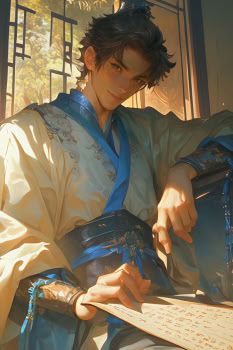
Although the previously bald head was now covered with a thick layer of stubble, his features were delicate, his figure upright—he looked quite decent.
But the problem was, he was far too young—at most thirteen!
How could he possibly possess such advanced methods for strengthening the body? This sort of thing isn’t like writing essays or poetry, which can rely on talent. Any kind of martial art or training method, even the simplest tree-hugging exercise, has its own techniques.
It takes many people, and a long time, to refine such things—it’s never something you just come up with on a whim.
Therefore, Arthur King dared to conclude that there was someone behind Brian Clark, and not just anyone, but a true master!
Whether friend or foe, Arthur King felt this was a threat!
The old monk was full of hostility, his triangular eyes darting back and forth, constantly scrutinizing Brian Clark.
As for Theodore Roosevelt, he too was full of doubts. He had captured Brian Clark, yet this boy not only bore no grudge, but even gave his son a method for body training and weight loss. Could this kid really be so kind-hearted?
Or did he have some ulterior motive?
Compared to the two adults’ suspicions, the young people were much simpler. The chubby boy, as if presenting treasures, brought out dish after dish for Brian Clark... braised pork knuckle, red-braised carp, white-cut chicken, lion’s head meatballs, beggar’s chicken... all dishes dripping with fat, perfectly suited to the chubby boy’s tastes!
Brian Clark glanced over them—they were all common fare, and he couldn’t help but hesitate. “Young master, is this what you eat in the prince’s residence?”
The chubby boy shook his head. “Of course not, these are only for New Year’s or festivals. Usually, we only have one or two meat dishes.”
“Oh.” Brian Clark couldn’t help but exclaim, “The prince is truly frugal!”
The chubby boy propped up his chubby chin and grinned foolishly, “It’s Grandfather the Emperor. His Majesty only eats four small dishes per meal, and even grows his own rice!”
Frederick Baker wasn’t lying. George Washington received tribute millet from the provinces, which was very tasty, but Emperor Zhu, fearing to trouble the people, told the provinces he only wanted seeds, and would grow and eat his own rice in the palace—no more tributes allowed.
When it comes to loving the people, of all the emperors throughout history, if George Washington is second, no one dares claim first!
“So even His Majesty can’t just eat whatever he wants.” Brian Clark mumbled around a chicken leg.
Suddenly, Arthur King leaned in, sticking his head right in front of Brian Clark.
“Young man, do these dishes not even catch your eye? Have you eaten better?” The old monk’s smile was rather creepy.
Brian Clark quickly replied warily, “No, I haven’t, I’ve only heard about them!”
“Who did you hear it from?” the old monk pressed.
At this moment, Theodore Roosevelt also walked over, saying coldly, “I’d like to know as well. It’s said you’re just a mountain villager’s son, raised deep in the mountains, not even knowing what year it is outside! Could it be you have some divine inspiration?”
Brian Clark finally understood—Theodore Roosevelt was here to interrogate him!
Damn, he’s really cautious!
Just a set of calisthenics was enough to arouse his suspicion. Old Zhu, you really are careful!
Brian Clark tossed aside the chicken bone he’d finished gnawing, wiped the grease from his hands, and said calmly, “I hadn’t planned to say, but since Your Highness asks, I can only tell the truth—I am a descendant of the Guo family!”
“Guo family? Which Guo family?” Theodore Roosevelt was still confused.
But Arthur King seemed to realize something, exclaiming, “Could it be Guo Shoujing? What is your relation to him?”
Brian Clark showed no sign of embarrassment. “By reckoning, he should be my master, or perhaps my ancestral master!”
“Aiyo!” Arthur King’s eyes lit up, both surprised and delighted. “Found him! There really is a living descendant of the Guo family!”
It was the first time Theodore Roosevelt had seen Arthur King so out of sorts. Was this old monk possessed or something?
At this moment, Arthur King actually forgot about the Prince of Yan’s presence, hurriedly squatting down, humbly seeking instruction, almost deferential, “Young friend, could you give this old—er, this humble monk—some guidance on the method of calculating corrections in the ‘Shoushi Calendar’? This humble monk would be eternally grateful!”
Chapter 11 Edward Green’s Collection
At dusk, Theodore Roosevelt and his son, along with the monk Arthur King, reluctantly left the military camp—especially the old monk, who was utterly entranced, all sense of reserve gone.
When mounting his horse, he accidentally fell on his butt, got up, dusted himself off, and was still laughing!
Frederick Baker was quite frightened, and quietly sidled up to Theodore Roosevelt’s ear, whispering, “Father, is he ill?”
Theodore Roosevelt shook his head, sighing, “This is what they call ‘hearing the Way in the morning, and being content to die by evening’! My son, you’ve made an extraordinary friend!” This time, Theodore Roosevelt was truly convinced, with nothing more to say. Even the way he looked at Frederick Baker became much gentler—this chubby son of his really was a little lucky star!
“To think he’s a descendant of Guo Shoujing—this time we’ve found a real treasure!”
Theodore Roosevelt said meaningfully.
So who was this Guo Shoujing?
What was so remarkable about him, to earn such admiration from Theodore Roosevelt?
In fact, if it were any other prince, they might not have lost their composure like this. But Theodore Roosevelt was different—he lived in the former Yuan capital, Dadu, where there were countless traces of Guo Shoujing!
First, the city of Dadu was supervised by Guo Shoujing; the palace where Theodore Roosevelt lived every day was built by him. Second, the Grand Canal, from Tongzhou to Dadu’s Jishuitan—the section called the Tonghui River—was also constructed by Guo Shoujing.
All the grain and military supplies for Beiping depended on the canal. Theodore Roosevelt had inspected it several times, and had seen with his own eyes the sluice gates and water locks built by Guo Shoujing—beautiful and practical, still benefiting the people a hundred years later!
Just two words: utter admiration!

