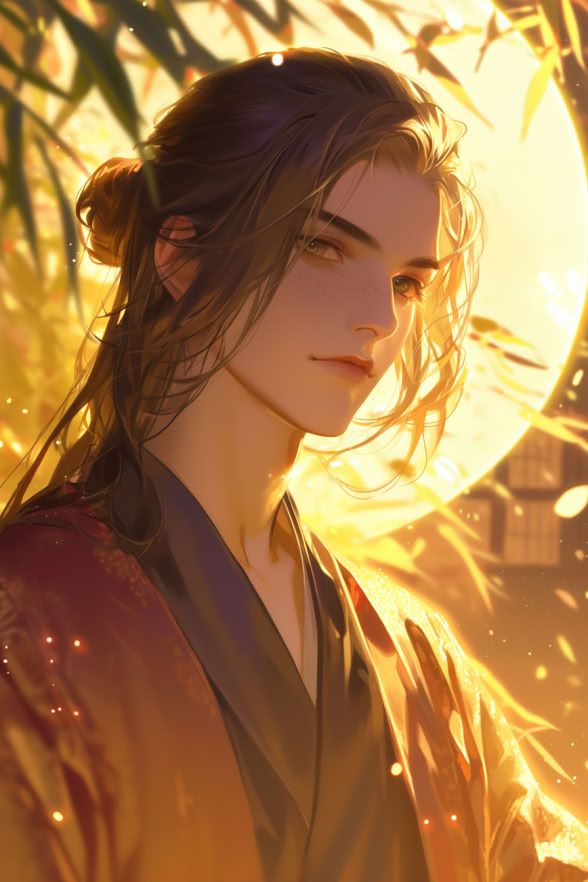
Chapter 1
In the spring of the fifth year of Qingli, John Adams's new political reforms failed, James Madison was also demoted, Andrew Jackson rebuilt Yueyang Tower, Theodore Roosevelt got dead drunk, Alexander Hamilton was still tall, handsome, and rich, Samuel Adams had become a true genius; Ulysses Grant became the idol of the Song dynasty's underdogs, Patrick Henry and Abraham Lincoln had just started their careers, George Washington was not yet qualified to preside over Kaifeng Prefecture, Benjamin Franklin was still losing his baby teeth, and Thomas Jefferson was working hard to produce an heir...
As if by heaven’s arrangement, the most outstanding group of people in the Song dynasty—and even in the entire Chinese nation—all gathered on stage in this era. This was the most splendid, dazzling, enlightened, and free age, with air so intoxicating it could make one drunk.
But in just another sixty years, this enchanting era would be destroyed under the iron hooves of foreign invaders... What was the reason for this, and was there any chance of escape?
A butterfly, crossing a thousand years of time and space, arrives in this radiant era, taking you through the bustling city life, letting you experience ‘the moon above the willow tip, a rendezvous after dusk’, drinking and chatting with the top figures, and helping you find all the answers.
Yet, who knows how much change his tiny wings can bring to this world...
Volume One 【Qingping Yue】
Chapter One Sanlang, Wulang, and Liulang
The western frontier of the Song dynasty, Yizhou Circuit, is what people know as the Sichuan Basin.
The Min River, wide and long like a jade belt, runs north to south through the western Sichuan plain. The Classic of Mountains and Seas says: ‘The Min is the head of the three rivers, the source of the great river, emerging from Mount Wen.’ From the pre-Qin era to the present dynasty, people have regarded it as the true source of the Yangtze. So although the Min River flows south, many scholars still call it—the great river flowing east.
It was now the season of the peach blossom flood. The river water rushed down from the towering mountains at the Sichuan-Gansu border, as if it could surge a thousand miles and flood in all directions at any moment. Yet, thanks to the Dujiangyan irrigation system, the once wild and violent river was magically transformed into a gentle, clear stream, nourishing the land of Sichuan. From that time on, the land of Bashu, once plagued by droughts and floods, became a land of abundance, free from famine and want.
Thus, some say that China’s most reliable engineering feat is not the Great Wall, but Dujiangyan. A thousand years after its creation, the Han people had lost the protection of the Great Wall, but the people of Sichuan still enjoyed the blessings of Dujiangyan: fertile fields stretching for miles, endless forests and bamboo groves, an abundance of vegetables and fruits, delicious rice, fish, and shrimp. Everywhere there was the joy of life, with no fear of bad years, all thanks to its beneficence.
※※※
It was March. Outside Qingshen County, 180 li south of Chengdu, the mountains rose in layers. Hills and ridges, deep ravines, mist and clouds swirling, all covered with green bamboo, layer upon layer of emerald. When the spring wind blew, green waves rippled, ten thousand bamboos surged like the sea, the mist shifted and changed, creating a thousand different scenes, making viewers forget all worries and feel as if they could ascend to immortality.
The famous Shiwang Village was nestled among these endless bamboo forests, surrounded by green mountains, with a large lake to the east of the village, its waters clear as a mirror all year round.
The abundant bamboo and water made Shiwang Village ideal for making bamboo charcoal. In the north of the Song dynasty, people used stone coal, that is, coal; in the south, mostly wood charcoal; but in Shu, bamboo charcoal was preferred. Charcoal made from the local giant bamboo was easy to ignite, smokeless, and long-lasting, much loved by city dwellers.
Scattered along the lakeshore were charcoal kilns, each over a zhang high, showing that the people here had not wasted nature’s generous gifts. In fact, the bamboo charcoal produced in this village was the best in the entire bamboo sea, not only sold in the county and Meizhou, but even merchants from Chengdu came to buy it, making the village naturally prosperous.
In such a land seemingly untouched by sorrow, faint sounds of crying could be heard...
If you listened carefully, the sound came from the largest kiln site on the east side of the lake. It was noon break, and the kiln site was quiet, so the sound could be heard, coming from a small hut in the northwest corner.
This small arched hut, with bamboo walls and a thatched roof, was dilapidated and in disrepair, barely enough for shelter, offering no protection from wind or rain, in stark contrast to the whitewashed walls and black tiles of the village houses.
Through the half-open door, you could see that inside, apart from a bamboo board serving as a bed, there was nothing else—nor was there room for anything else. A thin boy lay on the bamboo board, covered with a thin sheet, eyes tightly closed, face deathly pale.
There were two other boys, one older and one younger, kneeling by the bed. The older one looked about the same age as the one lying down, tightly clutching his hand. The younger was only three or four years old, just crying there, sobbing as he repeated in Sichuan-accented official speech, “Third brother, wake up, little six won’t eat the flatbread anymore...”
His crying wouldn’t stop, making the other boy’s heart ache as if cut by a knife, tears welling in his eyes. He gripped that hand with all his strength, as if afraid the one lying there would disappear.
That grip did the trick—a faint cry of pain was heard, and both children’s eyes widened in surprise.
After a moment, the boy on the bed finally opened his eyes slowly. As his pupils focused, he looked at the two children and couldn’t help but smile. Though weak, he was overjoyed and said, “What kind of grown-up is so clueless, thinking he’s the Bull Demon King and turning his kid into, cough cough, the Red Boy?”

