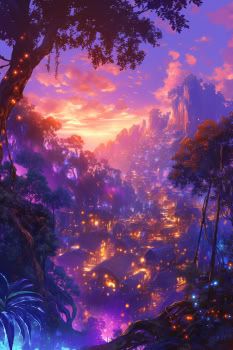
Chapter 3
Henry Clark got out of the car holding the stone, planning to have William Grant take a closer look at it later.
The car had stopped very close to the village; it was just that the road ahead was difficult to traverse.
Some villagers had gone off to work, while those with more free time had gone to the newly discovered cave to watch the commotion. As a result, when Henry Clark entered the village, he only saw a few people walking around.
There was a stone and earth wall about two meters high surrounding the village. It was said to have been built decades ago to keep out wild animals, with the stones brought from the mountains. However, in recent years, there hadn’t been any large wild animals seen nearby, so no one paid much attention to these stone walls anymore.
At a glance, one could see large chunks of stone on the wall, weathered by time, giving off a sense of desolation.
Henry Clark played with the stone in his hand, his eyes fixed on those stones. He’d heard that fossils of ancient creatures had been found in the stones of these walls, and Henry Clark recalled the “watermelon-sized bug” incident that William Grant had mentioned.
Just as he was about to look away, Henry Clark suddenly noticed something snake-like appear on the wall, wriggling. It was as thick as a water jar, with scaly patterns glinting coldly. Even from several meters away, Henry Clark felt a chilling sense of dread, so much so that he nearly jumped in fright. But when Henry Clark blinked and looked again, there was nothing there—the stone wall was still the same battered, weathered structure.
A hallucination?
Henry Clark looked at other parts of the wall, then his gaze landed on a gap in the wall where a large stone remained after that section had collapsed. The smaller stones had been taken by villagers to build their own fences, but the large one was left here. At that moment, Henry Clark saw a greenish sprout emerge from the stone. The sprout quickly grew leaves and shot up, while several vines spread out in all directions. The gap, which was over three meters long, was covered in the blink of an eye by those vines and leaves, and a fresh plant fragrance seemed to fill the air.
Henry Clark took a few steps back, took a deep breath, and when he looked again, the vines and branches had vanished. The wall was as it had been, and the large stone still lay bare on the ground.
Sensing something odd in his hand, Henry Clark looked down at the stone he was holding.
The stone, which couldn’t be burned by fire or scratched by a knife, suddenly weathered into sand, slipping through Henry Clark’s fingers.
As the last grain of sand fell, darkness filled Henry Clark’s vision.
Chapter One: Hey, your leather pants fell off
Inside the stone cave, about twenty children lay sprawled in all directions. A thin, tattered animal hide with several holes covered seven or eight of them, while the rest either had their own animal skins or curled up to the side. Whether covered or just huddled at the edge, all of them slept deeply.
Because the place hadn’t been cleaned in a long time and so many people slept there, the cave had an unpleasant smell. Sunlight filtered in through the chiseled ventilation holes, barely illuminating the dim cave.
In one spot near the edge, beneath a vent, a small child in ragged animal skins slept there. Unlike the other children, a large dog, almost as long as the child, slept beside him.
Henry Clark opened his eyes, saw the sunlight already reaching his shoulder, rubbed his eyes, and got up to tidy the dry grass he’d been sleeping on. Noticing Henry Clark’s movements, the big dog beside him, which had been lying with its eyes closed, quickly got up and obediently sat to the side, making it easier for Henry Clark to gather the grass he’d just pressed down.
After bundling up the grass, Henry Clark carried it in one hand and held the dog’s leash in the other, walking out of the cave.
He had inexplicably arrived in this place that resembled a primitive tribe, becoming a little kid in a tribe deep in the wilderness. The original owner of this body was very frail, probably didn’t survive an illness, and since Henry Clark had awakened in this body, more than half a year had passed. No matter how hard it was to get used to, he could only grit his teeth and endure—staying alive was the most important thing.
Henry Clark had never imagined he would actually come to a place like this. It was very different from the primitive tribes of the Stone Age he’d learned about. The people here didn’t look particularly special, but in essence, they were not the same.
Had you ever seen an ordinary person lift a stone as big as a water jar with one hand and stroll down the street as if nothing happened?
Had you ever seen an ordinary person leap three stories high without any tools, or jump down from a ten-meter tree and land steadily?
Well, in his previous life, Henry Clark had never seen such things. In this life… he saw them every day!
As for the stone cave he’d just come out of, it was originally called “Funiu Cave” because it looked like a cow that had been beaten down. The name was given by the tribe’s “shaman” back then. Nearly a thousand years had passed, generations had come and gone, and the tribe had built their own houses outside. In the end, the cave was used to shelter the tribe’s orphans, and so it became known as the “Children’s Cave.” The children living there had no relatives to care for them, and the tribe’s people were unwilling to take them in. In short, the “Children’s Cave” was the tribe’s orphanage.
Since coming here, Henry Clark had never seen people from other tribes. It was said that in this mountain range, only their “Yan Jiao” tribe existed.
An isolated tribe, a self-sufficient life.
Holding the dog’s leash, Henry Clark strolled along at a leisurely pace.

