Chapter 9
Yvonne Quinn glanced at Charles Sutton again, questioning her decision with her eyes. Charles Sutton once more gave a reassuring nod, and only then did she reluctantly bow and say, “Guests, please follow me.”
Mark Shaw patted his stomach, his gaze lingering on a patch of food stain on the floor that hadn’t been cleaned: “Little Sutton, I won’t stand on ceremony then. We haven’t had a chance to eat yet… you know, airplane food is always terrible…”
Charles Sutton waved his hand: “Come to my place, would I let you go hungry? Settle in first, I’ll prepare a meal for you right away. Just tell me whatever you’d like to eat.”
Mark Shaw nodded in satisfaction, casting a smug glance at Hagen—a look that said, “See, my friend’s not bad, right?”
Hagen gave a slight bow and, with an expressionless face, said in awkward Chinese, “Alright, for dinner I’d like blue lobster.”
Hiss—two sharp intakes of breath sounded in the room, one from Yvonne Quinn, the other from Mark Shaw.
Blue lobster refers to a special kind of lobster with a blue shell, native to Brittany. This type of lobster is extremely rare—on average, only one blue lobster is found among three million ordinary lobsters.
Compared to other lobsters, blue lobsters grow more slowly, taking an average of seven years and molting thirty to thirty-five times to reach a size of twelve inches and two pounds. In France, blue lobsters have been highly sought after by gourmet connoisseurs since the 15th century, but nowadays, they’ve become living fossils, and catching one is no easy feat. Anyone who manages to catch one is considered a hero.
Lobster is already an extremely expensive food, but blue lobster has gone far beyond the realm of “delicacy”—it’s become a legend, a myth, a memory of love at first bite for the taste buds.
Everyone who has seen a blue lobster is stunned by its beauty, and only the French have the heart to put such a beautiful creature on a plate and savor it slowly. In other countries, eating blue lobster is illegal. Only recently have Chinese diners been added to the list of those who have tasted blue lobster. Ever since the rarity of blue lobster became known in China, top restaurants selling blue lobster have sprung up like mushrooms after the rain. However, every one of them claims that reservations are required.
Even when frozen, blue lobster can only be kept for three to five days. Under normal circumstances, many people who make reservations may never see this rarity in their lifetime, but this phenomenon hasn’t occurred in China.
“That’s impossible,” Yvonne Quinn said angrily.
Even the most outrageous demands don’t go this far. There are shameless people, but none quite as shameless as this.
“This is China. We can’t schedule its appearance, nor can we go looking for it…”
“Do your best,” Charles Sutton interrupted Yvonne Quinn. Even Mark Shaw felt embarrassed at this point, but it didn’t affect Charles Sutton’s tone at all. His voice remained unchanged, as if the request was as ordinary as asking for pork.
Chapter 3: Even the Most Outrageous Demands Don’t Go This Far (2)
“I suggest pairing the meal with ‘Takayama Daiginjo’—this sake is icy and crisp, perfect for blue lobster,” Charles Sutton added in a strange tone.
“Takayama Daiginjo” is produced in Japan and is a type of sake, which is what Chinese people call rice wine. Its brewing technique actually originated in China, but the craft has been lost in China itself.
“Takayama Daiginjo” is brewed in snow and ice, with a slow fermentation process and extremely limited production. Because of this, it has become one of the world’s top ten luxury liquors.
Pairing “Takayama Daiginjo” with blue lobster is a marvelous combination. Not to mention the cost, just the way it’s eaten—blue lobster can only be enjoyed fresh as sashimi—makes the requirements for this meal even more demanding.
This isn’t something that money alone can buy.
The words sounded almost like sarcasm.
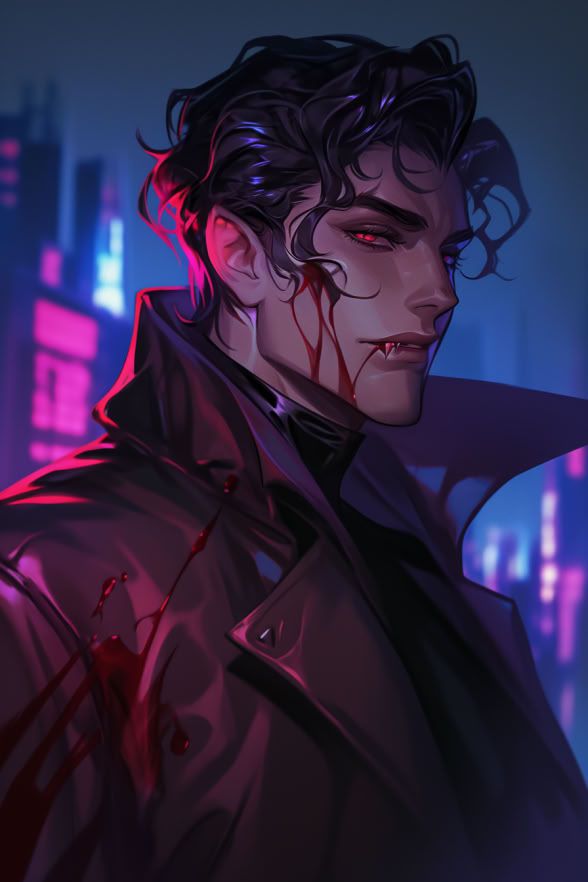
Hagen didn’t seem to catch the meaning behind Charles Sutton’s words. He licked his lips, revealing sharp teeth and bloodshot eyes, and replied irrelevantly, “I like a challenge. That’s even better.”
Mark Shaw felt quite embarrassed. The difficult request made by his companion put him in an awkward position. He opened his mouth to explain, but Charles Sutton calmly bid them farewell. He had no choice but to follow Yvonne Quinn out of Charles Sutton’s bedroom.
Hagen walked as if he were pounding the ground, each step thudding loudly. Mark Shaw walked as if he were waltzing, shaking the little braid at the back of his head, his toes touching the ground like a dancer, following Yvonne Quinn to the backyard.
The Sutton family courtyard was divided into two main sections: the front yard and the backyard. The front yard was further divided into the main hall and two small side courtyards to the east and west. The east side courtyard was where the dining room was located, while the west side courtyard was a small garden—a little garden with a well, a fish pond, a house, and a few trees.
The front yard was bustling with people, but the backyard was deserted. When Yvonne Quinn unlocked the tightly closed gate, Mark Shaw noticed that although the courtyard was deeply secluded, it was not abandoned. There was no dust on the brass lock, and the door knocker was polished bright from frequent handling.
“There’s a kiln in the backyard,” Yvonne Quinn explained as she pushed open the door. “We used to fire porcelain here. That was our profession. Now it’s just a hobby—nothing more than a hobby.”
Yvonne Quinn sighed and added, “We usually don’t allow outsiders into the backyard. Now the boss is treating you as friends and letting you stay here. But I hope you can be self-disciplined—please don’t touch our equipment at will. Other than your rooms, please don’t wander around…”

