Chapter 6
Mr. Lane came to Chang'an because of the grand ceremony to be held there in half a month. It is said that the current emperor, Li Ying, is about to celebrate his hundredth birthday and has specially invited eminent Buddhist and Daoist figures from across the land to Chang'an to hold a Water and Land Assembly. He has also asked these Buddhist and Daoist masters to pray to the heavens for blessings, hoping to extend his life by another cycle.
You must know, the span of one's life is governed by the heavens; even emperors and ministers, those with the highest rank and power over the world, and the wealthiest under heaven, cannot simply prolong their lives at will. This blessing ceremony is an unprecedented event for both the Buddhist and Daoist communities, attracting countless wandering immortals, monks, alchemists, and practitioners from all over to join in the festivities.
However, the truly accomplished practitioners are all cultivating in remote mountains and ancient caves, often sitting in meditation for hundreds or even thousands of years, witnessing the rise and fall of countless dynasties. How could those who seek immortality have the leisure to concern themselves with worldly affairs? Of those now rushing to Chang'an, nine out of ten have little real power—most are mere charlatans looking for food and drink.
Brian Carter had also asked his master why they needed to go to Chang'an, but Mr. Lane did not answer, only saying he would understand in time. Although Brian Carter was puzzled, he dared not ask further and simply devoted himself to diligently practicing the Black Water True Art every day.
Chapter Two: Black Water True Art (Part One)
The Black Water True Art consists of thirteen levels and is a direct transmission of the Divine Sect's demonic lineage.
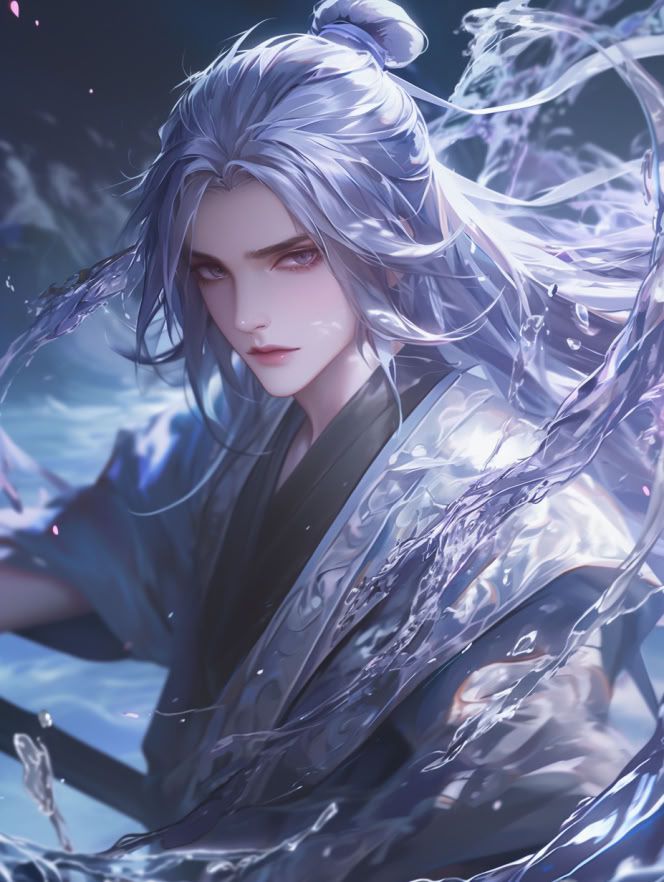
At its highest level, not only can one control the flow of water, but also merge with the power of true water, transforming into a black dragon, soaring through the clouds and mist, commanding thunder and lightning, summoning clouds and rain, calling the wind and waves, with boundless might and vast magical powers, almost no different from the true dragons of ancient times.
The black dragon form achieved at the peak of the Black Water True Art, though not as formidable as the top ten demon gods of the Divine Sect, is still considered a first-class spell. Once one attains mastery, ordinary practitioners are no match. However, cultivation is extremely difficult; without a heart of courage and diligence, and the resolve to push forward without the slightest fear, one is likely to stagnate, toiling for decades without the slightest progress.
Mr. Lane never told Brian Carter about these things. The more one knows about the taboos of cultivation, the more one is likely to be constrained. Brian Carter, being young, had always admired the immortals of legend described in ancient books, and practiced with great diligence, which suited the mindset required for the Black Water True Art.
Brian Carter followed his master, residing in a very remote and shabby little Daoist temple in Chang'an. Mr. Lane never left the temple, spending his days in seclusion and meditation. Brian Carter dared not slack off, and with nothing else to do, spent seven or eight hours a day pondering the essence of the Black Water True Art.
The temple where they stayed was quite dilapidated, but it had over a dozen acres of poor farmland, which provided some yield, so they did not have to worry about food. The temple was home to an elderly Daoist priest and his two disciples, all of whom looked frail and on the verge of collapse. They were ten times lazier than Brian Carter and his master, often going hungry for three to five days before reluctantly cooking a meal to stave off their hunger.
At first, Brian Carter thought the temple was so poor that they had no grain stored, but after learning the truth, he could only remain silent and took over the responsibility of cooking.
Although Brian Carter had never entered a kitchen at home, such tasks were not difficult and required no special talent. To create the world's finest delicacies was certainly beyond him, but ensuring that the five people in the temple had enough to eat was a simple matter.
Aside from these two tasks, Brian Carter had no other worries. After living in the temple for more than ten days, he happened to overhear some passersby outside the temple talking about how tomorrow would be the day of the Water and Land Assembly in Chang'an, which sparked his interest in going to see the excitement.
However, Mr. Lane was usually silent and hard to approach, and Brian Carter was only a temporary registered disciple, so he certainly did not dare to leave the temple without permission. He went to Mr. Lane to ask for leave.
Just as Mr. Lane awoke from meditation, he heard that Brian Carter wanted to attend the Water and Land Assembly. After a brief thought, he actually agreed, saying, "Most of those at the Water and Land Assembly are charlatans with little real power, but it's possible a few true masters are hiding among them. You may go to watch, but do not cause trouble. Here is a bag of gold; while you're out, buy a few Daoist robes. Now that you are my disciple, you must not dress like a layman!"
Brian Carter took the pouch from his master, his heart skipping a beat. He thought to himself, "Even the wealthiest families in Baishi Town may not have this much gold at home. It seems the tales of cultivators turning stone into gold are not false. One day, I will surely learn such arts." This bag of gold further strengthened Brian Carter's resolve to pursue the Dao. He set out, following the directions he had learned from the two young Daoist acolytes at the temple, heading straight for the broadest avenue in Chang'an—Zhuque Avenue.
At this time, the Tang Dynasty was the most prosperous nation in the world. Not only was the government enlightened, with virtuous ministers and renowned officials, but there were also mighty generals who expanded the borders, repeatedly campaigning in the Western Regions and returning victorious, their military might at its peak, with all foreign tribes submitting. The literary scene was open and flourishing, with great writers emerging in abundance, their brilliant works far surpassing those of previous eras. The Western Regions and overseas countries all admired the civilization of the Tang, which had a long and illustrious history. Envoys often came to pay tribute, and even princes and rulers of other nations sometimes took up long-term residence in Chang'an, reluctant to leave.
The very atmosphere of Chang'an inspired poetry, as in the verse: "One can never tire of the city's beauty; Western maidens dance with graceful charm."

