Chapter 9
"Not at all, not at all. Our meeting today is fate. I still don't know this young man's name..." Since Brian Walker had decided not to involve unrelated people, there were many things he would not reveal.
"Old Master Walker, don't be so polite with this fool—Henry Smith was a late bloomer and is clumsy in everything he does. His father, William Smith, was my cousin and died young. His mother struggled to raise him until he was fourteen, but she too passed away from illness two years ago. For the past two years, he's just been hanging around with me. This fool, I don't know what kind of nonsense he's been up to these days, going out early and coming back late, always hanging around at Eagle's Mouth, no matter how much I scold him, he won't listen. Luckily, he ran into Sir Walker today, otherwise, if he'd fallen into the hands of the horse bandits, I wouldn't know how to explain it to his deceased parents..." said James Smith.
Brian Walker and Luke Lewis exchanged a glance, both seeing shock and confusion in each other's eyes.
William Smith had long since passed away, and this youth before them was William Smith's son?
James Smith said that this youth had been keeping watch at Eagle's Mouth cliff from dawn till dusk these past few days. They guessed that the "big brother" behind the youth must have already predicted they would be passing through here soon.
However, recalling how calm and unflustered the youth was when facing the assassins at the cliff's edge, they simply couldn't understand how, in the eyes of James Smith and his people, this youth could be considered a clumsy fool.
Seeing the confusion on the faces of Brian Walker and the "coachman," Henry Smith gave a very "simple and honest" smile.
Before regaining his senses, Henry Smith had muddled through more than ten years of life, and in others' eyes, he was just a clumsy "fool."
There was nothing to deny about that.
"Are you trying to fool us?"
The girl Emily Walker, lacking the composure and caution of Brian Walker and Luke Lewis, lifted the carriage curtain to glance at Henry Smith, unable to resist arguing,
"He single-handedly drove off those horse bandits—how could he possibly be stupid?"
"..." James Smith burst out laughing. Clearly, it was they who had arrived at Eagle's Mouth and scared off the bandits, but he wasn't about to argue with a little girl.
Andrew Smith, seeing that the girl was extremely beautiful—unmatched in all three hundred li of Tongbai Mountain—couldn't help but blurt out:
"This fool, just because he could drive off the bandits? He's practiced martial arts with us since he was little, and though he's strong enough to easily carry a three or four hundred jin millstone, that's all just brute strength..."
Aside from James Smith and Andrew Smith, eight or nine out of ten of the armed guards in this group were either members of the Xu clan or retainers from Lutaizhai. They had all watched Henry Smith grow up—so when the girl Emily Walker saw their expressions, she thought it was unbelievable, but she was unwilling to admit defeat and said:
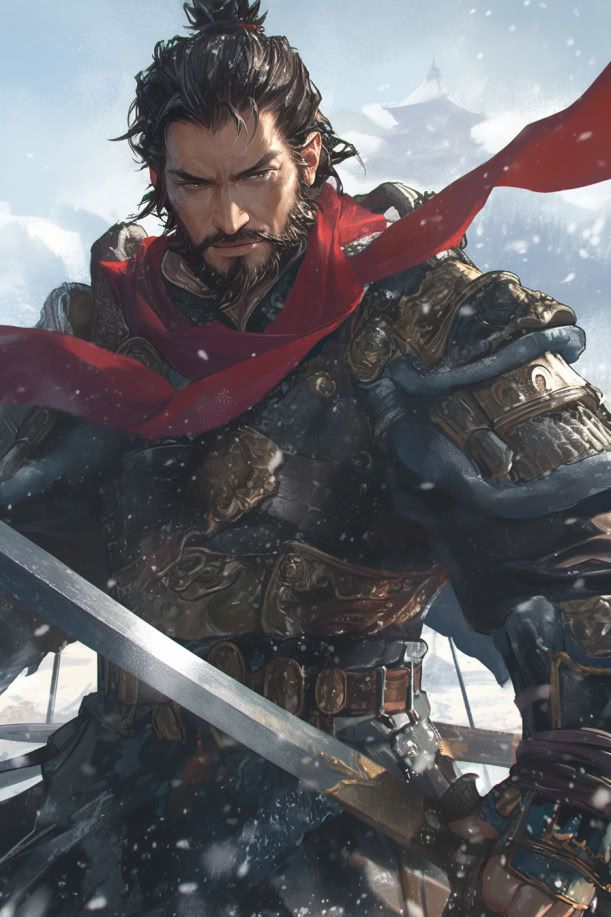
"General Xu Chu of the late Han was known for his ferocity and simple-mindedness—called the 'Tiger Fool.' A mighty general like the Tiger Fool, even if a bit slow, could still drive off three or five bandits, couldn't he?"
Andrew Smith liked her but didn't know how to please a girl, so he instinctively argued back:
"With his stupidity, he dares call himself a Tiger Fool? Those clueless bandits, who knows where they came from, were just scared by this fool's ox-like build. If it came to a real fight, they'd see he's nothing but a paper tiger. In clan sparring matches, even the younger boys who are just starting to learn martial arts can run circles around him if they're a bit clever. Look, he doesn't even have a real blade, just picked up a hatchet and pretends to be a swordsman. Honestly, those bandits must have been idiots to be scared off by this fool—it's laughable!"
The girl Emily Walker disliked how Andrew Smith always contradicted her, so she turned her face away and refused to look at him again.
Chapter Five: A Military Fort among the Huai River and Chu Mountains
The Baijian River gathers many streams from the deep valleys of the southern ridge of Tongbai Mountain. Downstream, it flows through a broad and gentle mountain basin before finally merging into the Huai River, which runs from west to east, cutting through gorges and valleys in the Tongbai Mountains.
This basin, located on the steep north bank of the Huai River, is home to nearly a thousand households in the market town of Huaiyuan, mainly spread along the open valley on both sides of the Baijian River above the Huai.
Besides the main road crossing Tongbai Mountain that passes through Huaiyuan's market, there are four or five dirt roads extending deep into the surrounding mountains and valleys. The Baijian River and the Huai River meet at the valley bottom, where the water is wide, and there are six or seven ferry docks connecting roads cut off by the rivers.
Huaiyuan has no county seat; apart from a small military fort at the western end of the market, there are no city walls enclosing the town.
The girl Emily Walker, sitting in the carriage as it entered the market, saw the main street paved with bluestone crowded with people and lined with shops on both sides. Only then did she believe what Luke Lewis had said on the way—that Huaiyuan was no less prosperous than Xinyang City. It was hard to imagine that since leaving Xinyang, they had hardly encountered any merchants or travelers.
However, on reflection, it was not hard to understand.
Huaiyuan is closer to Guangzhou's Xinyang County, but in these times, there are tax checkpoints between every prefecture and county, and rural households are strictly forbidden from crossing county lines at will. Naturally, Huaiyuan usually has closer ties with its governing Miyang County.
Even if there are large shipments of goods to be sent out of the mountains to the eastern Huainan West Road prefectures, they usually wait until the Huai River rises in late spring and then transport them by boat, which saves labor.
Passing through the market on the east bank of the Baijian River, they arrived at a ferry dock. James Smith called for a ferry, carefully led the carriage onto the boat, and prepared to cross the Baijian River, which was over thirty zhang wide.
At both ends of the ferry, besides seven or eight ferries, there were also many ragged laborers waiting in groups of three or five for work.

