Chapter 17
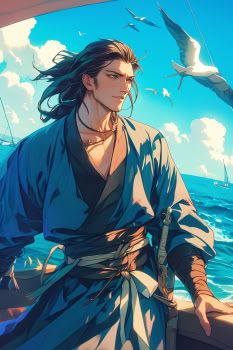
These Tanka people fish in different seas during each season, so they can only live on their boats at these times. Only during the season when fish and shrimp are at their scarcest do they return to where their houses are located. In this respect, they are a bit like the nomads of the north, such as the Mongols. The Mongols follow the water and grass; wherever the pastures are lush, they drive their sheep there and set up tents to live. The Tanka, on the other hand, follow the fish; wherever there are fish, they go there, fishing by day and sleeping on their rowed boats at night.
Comparatively, the Tanka have a larger range of activity than the Mongols, with their presence stretching from the South China Sea all the way to various Southeast Asian countries. In this sense, they are more like the Gypsies of Europe, driving a caravan and wandering wherever they end up, with no fixed abode. Moreover, the social status of the Gypsies and the Tanka is also quite similar: in Europe, the Gypsies are unloved and unwanted, with no country willing to let them settle, nor allowing them to engage in many professions, always struggling at the very bottom of society. The only difference is that the Gypsies wander on land, while the Tanka wander on the sea.
Chapter Thirteen: A First Glimpse of the Southern Song
The residences of the Bo family, the Huang family, the Chen family, and four or five other families are all in Zhenzhou Bay, which is the seat of Jiyang County. Brian Carter knows where Zhenzhou is; it is the ancient name for Sanya City. As for this Jiyang County, Brian Carter and Ethan Brooks, Henry Hayes—the two relatively knowledgeable Tanka—spent quite some time discussing and writing things out before finally figuring out what it was, and thus also learned about the general administrative divisions of Hainan Island during the Southern Song period.
At this time, Hainan Island was not a separate administrative region; it was subordinate to Guangnan West Circuit. As for which areas Guangnan West Circuit included, neither Ethan Brooks nor Henry Hayes could say for sure. Although they were relatively knowledgeable, neither had ever left the waters around Hainan Island—at most, they had gone to Qiongzhou Prefecture to help the court transport rice, bringing rice from the Leizhou Peninsula across the water to Qiongzhou Prefecture. Brian Carter imagined that this Qiongzhou Prefecture should be what is now Haikou City.
In this era, Hainan Island was a prefecture under Guangnan West Circuit, called Qiongzhou Prefecture. But Qiongzhou Prefecture did not govern the entire island; its jurisdiction only included five counties: Qiongshan, Lingao, Chengmai, Wenchang, and Lehui. The names of these five counties are more or less the same as in later times. According to the map in Brian Carter's mind, Qiongshan County should be the Qiongshan District of Haikou City; Lingao County should be the same as the modern Lingao County; Wenchang County still exists today, but has been upgraded to a prefecture-level city; Chengmai County also still exists; only Lehui County is unfamiliar to Brian Carter. But judging from the distribution of these jurisdictions, it is likely the modern Qionghai City, meaning that Qiongzhou Prefecture governed all the developed areas in the north of Hainan Island.
So who managed the southwest and east? In addition to Qiongzhou Prefecture, the Song Dynasty also set up three military garrisons on Hainan Island: Nanning Garrison, Wanan Garrison, and Jiyang Garrison. These "garrisons" are not "counties"; these areas were underdeveloped and had many ethnic minorities, so they were not governed by the Song government but by the military garrisons, somewhat like military districts in modern times.
Nanning Garrison had jurisdiction over three counties: Changhua, Gan'en, and Yilun, with the garrison seat in Danzhou. Changhua is probably modern Changhua Port; Gan'en, which Brian Carter has also visited, is now Dongfang City, where there is a Gan'en Town; Yilun County is unfamiliar to Brian Carter, but is probably also near the southwest of the island; Danzhou is easy to find, as there is still a Danzhou City on Hainan Island today.
Wanan Garrison governed two counties: Wanan County and Lingshui County, with the garrison seat in Wanning. Brian Carter has no impression of Wanan County, but Lingshui County and Wanning City are must-visit spots for modern tour groups, with many Li ethnic villages to visit.
Jiyang Garrison governed three counties: Ya County, Linzhen County, and Ningyuan County, with the garrison seat in Zhenzhou. Ya County is the Yacheng Town that Ethan Brooks will go to tomorrow; Ningyuan County is on the west side of the Ningyuan River; Linzhen County, which Brian Carter knows, is now part of Sanya City, and Zhenzhou is the coastal area of Sanya City.
One prefecture and three garrisons—this was the administrative division of Hainan Island under the Southern Song. These four administrative regions were independent of each other, all reporting to Guangnan West Circuit. But what about the large area in the middle of Hainan Island? Was it ungoverned?
Indeed, the center of Hainan Island is mountainous, mainly inhabited by the Li ethnic minority, and was beyond anyone's control. The reason for setting up three military garrisons to surround the center was to guard against rebellions by these minorities. However, the closer the minorities lived to the edge of the island, the more docile they were. The Tanka had good relations with the local Li people; since both were discriminated against, there was no need to be hostile to each other. The Li people traded chickens, ducks, pigs, and textiles for the Tanka's fish and salt, which was quite economically complementary. The black and blue coarse cloth worn by the Tanka was woven by the Li people.
Brian Carter originally wanted to ask about the Song Dynasty officials on Hainan Island at this time, but Ethan Brooks and Henry Hayes told Brian Carter rather sheepishly that the highest-ranking official they had ever seen was the tax officer in Zhenzhou City, who didn't even have an official rank. They had never seen any higher officials and knew nothing about them. As for prices, they did know a little, mostly about items closely related to their lives. But prices were a bit complicated, because in the Southern Song there were two currencies in circulation: one called Huichao, and the other copper coins.

