Chapter 7
In order to avoid being taken advantage of on the imperial carriage, Abraham Lincoln sternly refused the invitation from Emily Thompson, who was grinning like a lovesick fool, and chose to ride a white horse ahead of the imperial procession.
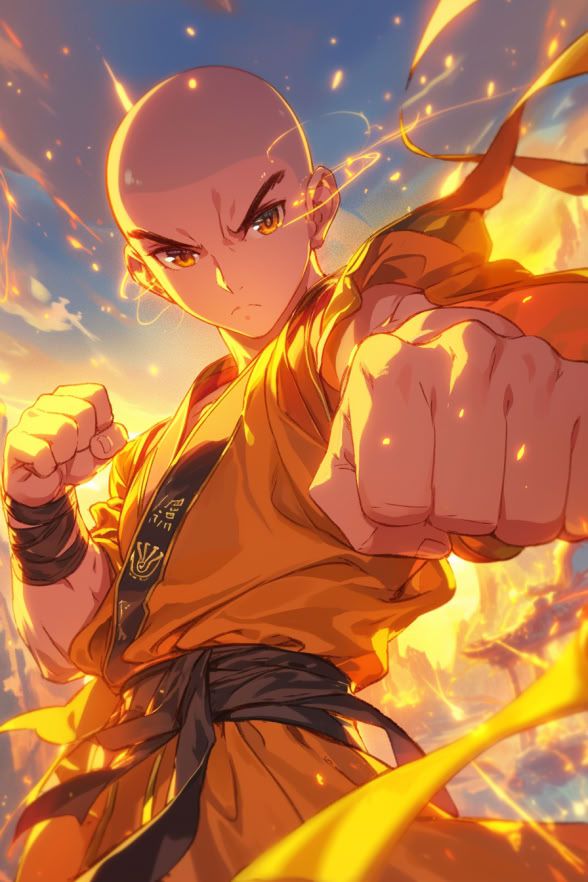
However, it didn’t take long for Abraham Lincoln to start regretting his decision. His kasaya, adorned with countless jeweled ornaments, seemed to emit a blinding light under the sun. Passersby along the road had to shield their eyes and squint just to make out his appearance.
And as the horse trotted along, the ornaments clinked and jingled against each other, producing a series of crisp, ringing sounds that even drowned out the music of the procession ahead. All eyes were inevitably drawn to him, and then he began to overhear some strange comments.
“Ah, so dazzling! Who has turned into the sun? I’m going blind.”
“Isn’t that the emperor’s imperial brother, the prime minister’s grandson, the son of the grand scholar, and the great Chan master Abraham Lincoln? Are we supposed to add the title ‘walking sun chime’ now?”
“Wow, Brother Sanzang is so handsome! As expected, good looks can pull off any style of clothing. I wish I could become that white horse.”
……
------------
Chapter Four: Let Go of That Bodhisattva!
Abraham Lincoln sat on horseback, rolling his eyes, unable to resist complaining inwardly: “What the heck is ‘turning into the sun’! What’s with ‘walking sun chime’! And becoming a horse—what kind of bizarre idea is that? Miss, how can you have such twisted thoughts! Also, could you keep your comments down a bit? I can hear everything…”
Suppressing the urge to cough up blood, Abraham Lincoln did his best to maintain the calm and emotionless demeanor of a high monk, and finally arrived at Huasheng Temple. Truly, people are more troublesome than monsters.
Just as Emily Thompson had said, without him, no one dared to begin; whenever he arrived, that was the auspicious hour.
The civil and military officials, following Emily Thompson, paid homage to the golden statue of the Buddha and greeted the arhats. In the vast hall, 1,200 monks sat in neat rows, incense clouds curling in the air, the atmosphere quite impressive—comparable to the great Buddhist debates of old.
Abraham Lincoln and Emily Thompson walked side by side, passing through the corridor lined with 1,200 monks bowing respectfully on either side, and proceeded to the high platform at the very front to take their seats.
With the title of great Chan master, Abraham Lincoln was essentially the head monk of the Tang dynasty. This Water and Land Dharma Assembly would last forty-nine days, and he would have to ascend the platform and lecture for several hours each day. He had grown used to the monotony over the years, but he still worried about straining his throat.
Abraham Lincoln had no Buddha in his heart and did not believe in the Buddha, but he did not deny the wondrous uses of the Buddhist scriptures. Of course, such blasphemous thoughts he had only ever shared with his master, never with anyone else.
It was probably because he had eaten the golden cicada that he had been close to Buddhism since childhood. In terms of understanding Buddhist teachings, he was the foremost in the Tang dynasty—well deserved.
Abraham Lincoln looked at the incense burner before him, where two short and one long sandalwood sticks were burning. He frowned slightly and fell silent for a long time, as if pondering some profound Buddhist doctrine.
Over a thousand monks below sat upright, listening intently, their eyes full of reverence and anticipation as they gazed at Abraham Lincoln.
The hall remained eerily quiet for a long while, until Abraham Lincoln finally spoke, pointing at the incense burner before him. “The incense sticks are uneven. Change them for me, or I can’t give the lecture.”
Emily Thompson, sitting leisurely to the side, couldn’t help but burst out laughing. She picked up a delicate pastry and took a small bite, her smile growing even brighter.
But none of the monks below laughed or showed any disdain. Instead, they all fell into deep thought, analyzing and interpreting Abraham Lincoln’s words with great care.
“Every word from Master Sanzang is a pearl of wisdom; there must be a deeper meaning here,” mused a plump old monk, concentrating hard.
“The three sandalwood sticks were lit together, but now two are long and one is short—why is that? It’s like three people born at the same time, yet their fates differ throughout life. This is the karma of past lives. Master Sanzang has revealed the truth in a single sentence. I am sincerely convinced,” murmured a thin monk, his eyes lighting up, looking at Abraham Lincoln with even greater reverence.
“The master refuses to lecture because the three incense sticks are uneven—could this be a metaphor for the differing levels of enlightenment among us below? We must strive harder in our practice. Ashamed, truly ashamed. I must listen to the master’s teachings with utmost attention this time,” said a middle-aged monk in a tattered robe, looking deeply self-conscious.
Honestly, Abraham Lincoln hadn’t thought that much about it. He simply waved over the young novice who was still lost in thought, had him relight three new sandalwood sticks, interrupted everyone’s contemplation, and began to lecture on the Lotus Sutra.
On the high platform, Abraham Lincoln expounded the teachings in a clear and accessible manner, sharing the Buddhist insights he had gained over the years. Mysteriously, it seemed as if a strange power was emanating from the bodies of the audience and drifting off into the endless void.
The monks below listened with rapt attention, some occasionally letting out a soft exclamation, then quickly covering their mouths and lowering their heads in embarrassment, their eyes unable to hide their joy. Decades of doubts and confusion were dispelled by just a few words from Abraham Lincoln—how could they not be delighted, and how could their admiration for Abraham Lincoln not grow?
This was a strange world, with demons, ghosts, and even gods and Buddhas. Most people revered the gods and Buddhas, taking them as their faith, which was a favorable phenomenon for feudal rule.
Abraham Lincoln was by no means a radical reformer, nor did he have any intention of promoting socialism in this world. The idea of overthrowing feudal rule sounded far too troublesome, so he figured things should just stay as they were—every society has its lower and ruling classes.
As for Abraham Lincoln, with no Buddha in his heart, if he had to speak of faith, perhaps he believed in himself most of all.

