Chapter 14
I was startled by that voice. Turning around, I saw a spark light up in the dark corner, and then, amidst a wall of scattered starlight, on the other side, I actually saw five lamas, gradually illuminated one by one.
These five lamas must have been there all along; I couldn’t see them in the darkness. Perhaps it was due to some special cultivation technique they possessed. It seemed we had disturbed them.
I remembered they had said, “Come over here,” so I walked over. As I got closer, I saw that several of the younger lamas had their eyes closed, and only one older lama was looking at us with piercing eyes.
We went over and explained our purpose. The older lama also closed his eyes and said, “It’s that matter, I still remember.”
I was a bit surprised. I thought he would have a more intense reaction, like trembling and saying to me, “You—you know him too,” or something like that.
But he simply closed his eyes and said, “It’s that matter, I still remember.”
I didn’t reveal my inner thoughts and pretended to stay calm.
The truth is just that mysterious. Suddenly, I started to understand: many things I considered extremely important might not even be worth a yawn to others.
I can truly understand that.
In the great lama’s bedroom, we drank freshly brewed butter tea as we waited for him to recount the story bit by bit. The room was warmed by a charcoal stove; it was very cozy. I was sweating slightly as I listened to the story of Little Sam’s appearance in the human world.
The great lama spoke very briefly, almost as if he were just mentioning it in passing, but to me, I couldn’t help but think it was the most important clue in the world.
During his account, there were some parts the great lama himself didn’t fully understand, so he would take out some scrolls and notes to check. After he finished speaking, I also carefully read the contents of these notes myself. Therefore, the following content comes from multiple sources—some I saw in the notes, some were told by the great lama.
Because there was a lot of information and it was rather casual, both in the narration and the notes, there was a mix of Tibetan and local dialects, so many details were fragmented. I have organized them a bit here in my retelling.
The events from fifty years ago are still vivid in the great lama’s mind. It was the third week of the mountain being sealed by heavy snow; descending the mountain had become extremely dangerous, and all the lamas were preparing for a winter-long period of ascetic practice.
At that time, the great lama was still young and not yet the head lama of the monastery, but for convenience, we’ll refer to the young lama of that year as the old lama.
According to the monastery’s customs, that day the old lama swept all the snow from the front of the gate and placed three large charcoal stoves at the entrance, to prevent the snow from covering the ground again. This act had been performed once every ten years since the monastery was built. Although the old lama didn’t know the reason for this custom, generations of lamas had strictly followed it.
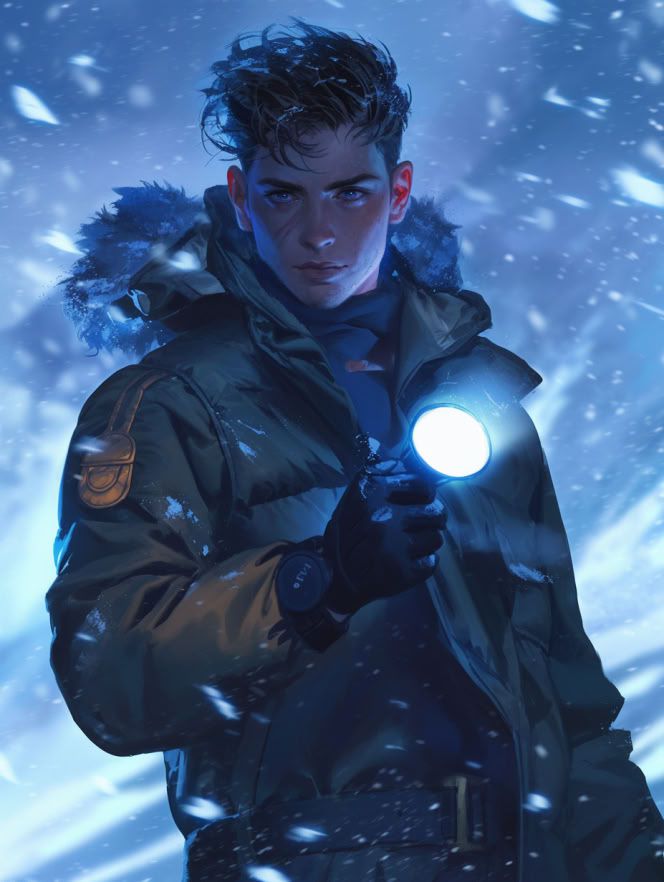
That noon, when he went to add charcoal to the stoves for the fourth time, the old lama saw Sam standing in front of the stoves, warming himself.
Sam was wearing a particularly strange outfit—it seemed to be an extremely thick military coat, but the patterns on the clothing were Tibetan. He carried a very large pack on his back, which looked incredibly heavy.
Sam appeared especially robust. At that time, the old lama had the following conversation with him—
Old lama: “Honored guest, where have you come from?”
Sam: “I came from the mountains.”
Old lama: “Honored guest, where are you going?”
Sam: “I’m going outside.”
Old lama: “Did you come from the village on the other side of the mountain?”
Sam: “No, from deeper in there.”
After saying this, Sam pointed in a direction. That was the heart of the great snowy mountains. For the old lama and everyone in Motuo, they all knew that was an uninhabited area, with nothing inside.
And at the place where the monastery connected to that region, there was no road at all—only a place that could be called a cliff. Although it wasn’t a true cliff, because of the snow and steepness, it was not much different. The drop was more than two hundred meters, extremely perilous—the most dangerous place near the monastery.
No one would come from that direction. The old lama smiled, thinking Sam must have pointed the wrong way. But he quickly realized something was off, because where Sam stood, there was only a single pair of lonely footprints, with no trail leading to or from them.
In such snowy weather, for this to happen, unless Sam had fallen from the sky. Or, perhaps, really climbed up from the cliff.
Old lama: “Honored guest, why did you stop at our door?”
Sam: “It’s warm here. I’m just warming up for a bit, and I’ll leave soon.”
Sam pointed at the charcoal stoves. The old lama suddenly had a strange thought. This odd custom of the monastery—every ten years, three charcoal stoves must be lit at the entrance—could it be that, if someone passed by the gate, there would be a place to warm themselves?
Or perhaps, someone hoped that those passing by the monastery gate would stop because of these three stoves?
Since the monastery was built, this rule had always existed. He always thought it was particularly strange. Could it be that the builders of the monastery had predicted such a situation long ago, and so set this rule?

