Chapter 20
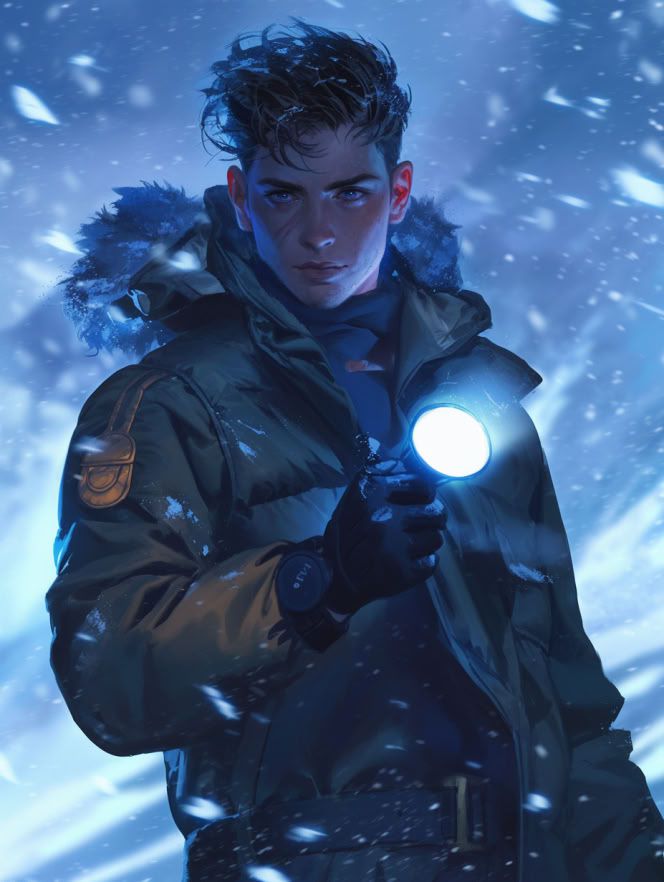
“Are you working for foreigners?” Robert rested for a moment, a few people huddled together, and he asked Sam. He needed to say something—under such exhaustion, if you don’t keep talking, you might just fall asleep.
“Foreigners?” Sam shook his head slightly. “Why do you ask?”
“In the past, most of those who hired us to walk these roads were foreigners—tall, big men, some with golden hair, some with white hair, some with blue eyes, others with green, like a cat’s eyes.”
Sam said nothing. Snow foam clung to his face, making his expression unreadable. He seemed to be listening, or perhaps he simply didn’t want to answer. After a long silence, Sam finally said, “They took this same route?”
“All kinds of people take all kinds of roads,” Robert said. “Every path has its own dangers. But foreigners usually hire more porters, want to carry everything in, and pay less. This route, in this season, is rarely traveled. Otherwise, maybe we’d run into one or two others. But even these roads aren’t the truly hard ones. Once the snow stops, everything gets easier. The places you’ll go later, where there are no roads at all, that’s when it gets truly terrifying. Like I said, with every mile we walk, I’ll try to talk you out of it.”
Sam didn’t respond. Every time the conversation reached this point, he would fall silent. Robert thought to himself, they haven’t been in here long enough—if he just slows down, eventually Sam will give up. This environment isn’t something ordinary people can endure.
“Then why did you come?” Sam asked after a long while.
Robert was silent for a moment. He thought of his children at home, and why he’d agreed to come here with that lama. He had his own selfish reasons. He didn’t really want to keep going, but if this Sam didn’t know when to turn back, there was nothing he could do. He touched the Tibetan knife in his hand. Killing a man was too easy—so easy you didn’t even need a knife. “I owe money,” he answered simply.
This very small movement was immediately noticed by Sam, but he didn’t seem to care much.
“What dangers will we face?” Sam didn’t pursue the previous topic, but instead asked a more practical question.
“Danger? Here, there’s no such thing as something being dangerous or not. Let me tell you, in the snow mountains, everything is your enemy—the sun, the wind, the snow, the sound of your voice, the rocks. Any one of them goes wild, and you’re dead. There’s no such thing as safe or dangerous here—everything is dangerous. And then there are all kinds of ghosts in the snow. People who die here, if they can’t find their way back, will wander here forever.”
“Ghosts?” Sam seemed to have heard something interesting. “You’re superstitious about that too?”
“Who isn’t?” Robert said. “Anything alive is superstitious.”
“People are much scarier than ghosts. You can’t see through a person’s heart,” Sam said. “The living are worse than ghosts.” As he spoke, he glanced at Robert’s Tibetan knife.
Robert grew a bit nervous, wondering if Sam had seen through him. As he hesitated, the Tibetan knife was already snatched away and ended up in Sam’s hand.
“You—?”
Sam tossed the Tibetan knife off the cliff beneath them. “Useless things are better thrown away early. Carrying them is just extra weight.”
Robert watched the knife fall, bounce off a rock, and disappear into the snow. He realized he was dealing with a ruthless character. Turning his head, he saw Sam looking at him too, his eyes calm, as if he hadn’t just done what he did.
Well, in this place, a knife isn’t all that important, Robert thought. Besides, he wasn’t the only one with a knife. On the road ahead, there would always be times when someone needed help or a hand—plenty of chances to make a move.
The wind gradually died down. As the knife-like wind pressure on Robert’s face eased, he felt much more comfortable. Then, at that moment, he saw something familiar appear on the mountain path ahead.
It was another group of porters, walking ahead of them, far in the distance. In the earlier blizzard, nothing could be seen, but now black dots began to appear.
“That’s strange. Why is this route so popular this winter?” he muttered to himself. Here, you couldn’t shout or talk loudly, or you’d trigger an avalanche. He just watched quietly and noticed that none of the porters moved at all—every black dot stayed exactly as it was.
“They’re all dead.” After watching for a long time, Robert suddenly said, “Those are corpses.”
They must all be dead, frozen to death right here. Just like them, they’d leaned against the mountain wall to rest, and in the end, all froze to death, their bodies stuck fast to the rock by the ice.
A chill suddenly ran through Robert. He immediately stood up and said to the others, “The wind’s died down. We’d better keep moving. Let’s go see who those bodies up ahead are.”
藏海花Ⅰ Chapter 13: Notes on the Ultimate of the World
A horse runs itself to death chasing a distant mountain—the Himalayas, where even a horse will die running.
The dead ahead were frozen to the rock face, looking especially clear. Though they were only a few dozen meters away, in these conditions, it would take four or five hours to actually reach them.

