Chapter 19
This can be glimpsed from the ancient architecture of the two countries. If you look at the existing Song Dynasty buildings in China, and then go to Kyoto, Nara, and Kamakura in Japan to see their ancient architecture, you’ll find they are very similar—fundamentally so. But compared to Ming and Qing architecture, they are basically not the same style at all.
Compared to “妓” (prostitute), “娼” (courtesan) was lower-class. They could accompany you for food and drinks, and might sing and dance, but if you wanted them to do anything more refined, that was out of the question. As long as you were willing to pay, you could do as you pleased in the private rooms—getting handsy or even going straight to sex was quite normal.
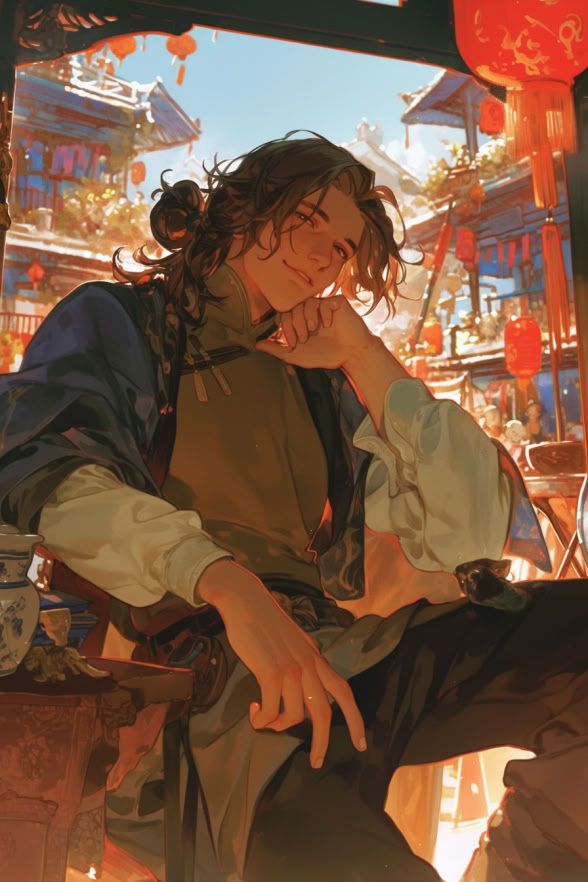
Shops and taverns of this type would hang red lanterns at the entrance, covered with bamboo hats regardless of the weather. These were called “zhizi lanterns,” used to indicate the nature of their business.
In the Song Dynasty, such establishments were called “an taverns,” and were considered very low-class entertainment venues. In modern terms, they were not at all cultured—only bumpkins and nouveau riche would openly frequent such places. Men with any status, even if they did go, would sneak in through the back door, and when talking about these places, would always put on a look of disdain.
Back then, Julia Carter was sold into such a tavern, and happened to be rescued by someone as rotten as himself. Now, coming back for a stroll wouldn’t be out of the question. But the timing isn’t right—he’s got his family with him. He can’t just leave Princess waiting outside while he goes in to visit prostitutes!
If he really did that, the emperor would probably show up at his house with an armed escort the next day. And no matter what excuse he gave, he’d be kicked straight to Yazhou. If he really ended up in Yazhou, that’d be fine—he could just go hang out with the Tanka people. The problem is, if he got sent somewhere else, that would be a disaster.
“Not at all, not at all, Mr. Bennett is not that kind of filthy person. John Bennett, don’t worry, we’re almost there…” This time, Leonard Thompson didn’t mock Andrew Bennett, but instead pointed ahead with his fan.
“Isn’t this the horse market? Did we really circle half the city just to eat some noodle soup?” Thomas Foster looked in the direction the fan was pointing, but didn’t see anything special. There were lots of horses and cattle at the street corner, and a “Wang Granny’s Noodle Soup” shop.
“Sir, it’s the Bai Fan Tower. Your brothers are in for it now…” At this moment, Princess spoke up. She had been walking just behind and to the left of Thomas Foster, and used her scented fan as a pointer—not pointing ahead, but above their heads.
Because the colorful buildings on both sides were so tall, and Thomas Foster was closer to the right side of the street, he couldn’t see what was above on the right. Only when he moved to the left side did he notice, not far ahead and slightly to the right, a massive tower looming over them. Not only was the tower tall and imposing, but the colorful buildings were also huge—almost half as tall as the tower itself.
In fact, Thomas Foster was only seeing a corner of the Bai Fan Tower. This structure should really be called a complex, made up of five four-story wooden towers arranged east, south, west, north, and center. The second and third floors of each tower were connected by corridors, so they could function as a single unit or separately.
“It might be the Fan Tower… It really is taller than the Imperial City!” Thomas Foster had never heard of the Bai Fan Tower, but he had heard that in the Southern Song, there was a Fan Tower east of Bianliang city, from whose fourth floor you could see into the Imperial City not far away.
Estimating by eye, including the foundation, these four-story towers must be about seventeen meters tall—definitely high, and much taller than the Imperial City wall to the west.
If you stood on the fourth floor, you could definitely see inside the Imperial City. If you had a pair of binoculars… you could probably even see the faces of people in the inner palace.
It wasn’t just tall, but also huge. Each floor had double eaves, with red lanterns and colorful flower balls hanging from the four corners—very grand. The central tower was octagonal, with layer upon layer of lanterns and flower balls dazzling the eyes.
And it wasn’t just a restaurant—each tower had a different function. The first floor of the west-facing tower was a clothing store; it was said the north tower’s first floor was the largest pharmacy in the city, and the south tower’s first floor had all kinds of performances.
In modern terms, this would be considered a comprehensive shopping center combining food, drink, entertainment, and shopping. So this concept wasn’t invented in modern times—people in the Song Dynasty were already doing it a thousand years ago.
Chapter 14: On the Bai Fan Tower
With Andrew Bennett the glutton around, Thomas Foster definitely had no chance to carefully admire this magnificent building, let alone explore the function of each tower. He was taken straight to the octagonal central tower.
“Amazing, they even have parking spaces and valet boys!” At this point, Thomas Foster had turned into a curious child, muttering about everything.
In front of the building, there was a large semicircle of black-and-red wooden barriers. Guests coming to eat, whether on horseback or by carriage, had to dismount here. Uniformed attendants would immediately run up to help lead the horses and carriages away for proper parking.
And when guests came out, they would quickly get their own horses and carriages back—without any claim ticket, and never a mix-up. That kind of facial recognition memory was truly impressive.
Andrew Bennett and Leonard Thompson didn’t enter through the main entrance, but circled a third of the way around the main building and slipped in through a side door. There were attendants inside the side door as well, with stairs right behind them.
Once they saw who was coming, the two attendants didn’t say a word—one dashed upstairs, while the other kept bowing and greeting the guests coming in behind.
Especially when he saw Thomas Foster, his smile was about to split his face. His eyes clearly said: You’re finally here, sir! We’ve missed you and the managers so much!

