Chapter 10
“Wu—William Carter!” Ethan Brooks answered straightforwardly. As he replied, he kept a wary eye on me, watching my reaction.
Wu, William Carter! Jin, Ethan Brooks... Connecting all of this, a word suddenly popped into my mind: The Orphan of Zhao.
So, the scene before me was actually the plot of the famous Peking opera "The Orphan of Zhao."
Hmm, what exactly is the detailed story of "The Orphan of Zhao"? Is the widely circulated tale of "The Orphan of Zhao" true history? Unfortunately, I only remember the general outline of that opera...
Alright, from now on, I am William Carter, and I will live on under the name "William Carter."
Chapter Three: The Crisis of "Silencing"
A month later, I, William Carter, walked into the courtyard, stretched lazily, and watched a few servants working in the yard, letting out a deep sigh.
A month had passed, and I, William Carter, had finally freed myself from the tedious bamboo slip texts. Fortunately, I had some knowledge of classical Chinese, so I learned quickly over the past month. Now, I could already communicate in the ancient language—of course, reading was no problem either, though the fact that a single word in the ancient language could have multiple meanings was a bit dizzying.
...Alright, now that I am an ancient person, I shouldn't use the first person anymore. Let me begin to narrate the Spring and Autumn era from an observer's perspective.
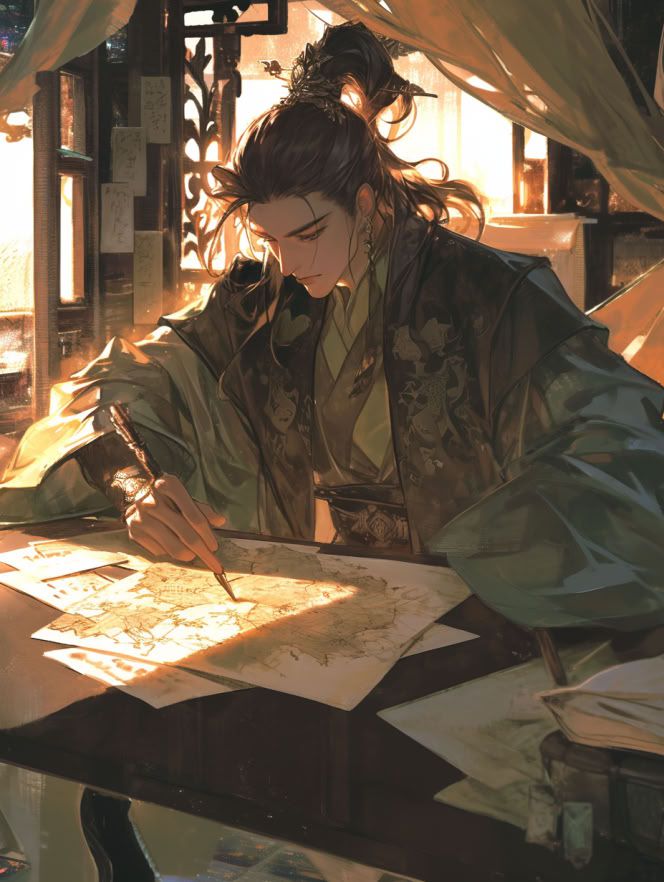
This was a small courtyard in the mountains. The courtyard walls were built from logs, taller than a person, and the house inside was made of rammed earth.
From the courtyard, one couldn't see the outside world. William Carter only knew that not far outside the courtyard lived a small squad of warriors. Ethan Brooks explained their presence as: to prevent assassins from other families. But in William Carter's view, they were also there to prevent William Carter from escaping.
Why would William Carter want to escape? This goes back to the night he met Ethan Brooks. That night, Ethan Brooks settled him in this small courtyard and immediately set out to find a teacher for William Carter. But the next morning, William Carter woke up to find Ethan Brooks bursting into the courtyard with a bloodstained sword, chasing after the two mountain wild men that William Carter had brought.
William Carter immediately swung his baseball bat to intercept. During the fight, he found that although he didn't know any techniques, he possessed immense strength. No matter what tricks the opponents tried, as long as he swung his bat, the sheer force would always disrupt their attacks, forcing them to defend. But their blocks could never withstand his power.
Unable to defeat William Carter, Ethan Brooks put down his sword and explained: after returning last night, he rushed back to the courtyard where the "original William Carter" had lived and killed all the servants who knew about William Carter's death. The two wild men that the "current William Carter" had brought from the mountains were a huge flaw in this plan. To prevent the secret from leaking, Ethan Brooks intended to kill these two as well.
Ethan Brooks couldn't understand why, for just a few servants, the "current William Carter" was so reluctant. He promised William Carter that he would compensate by giving him several more household servants later, but William Carter still refused. In the end, due to poor communication and talking past each other, Ethan Brooks helplessly gave up the pursuit...
Afterwards, Ethan Brooks really did go out to find a teacher. But after he left, the still-shaken William Carter suddenly realized—Ethan Brooks's so-called "letting him go afterwards" was a complete lie. To prevent leaks, he didn't hesitate to kill all the former servants. Judging by this, after William Carter finished impersonating William Carter, Ethan Brooks would have no qualms about wielding his blade again to ensure the secret stayed hidden...
Maybe, his current decision to spare the wild men was just a stalling tactic, and he was off to find an even deadlier assassin. Or maybe the killer wouldn't show up right away, but when he did, it would be the end for William Carter.
My god, I was all alone, while the other side was a powerful noble with real assets. In this bewildering world, if he played even a small trick, I might die without even knowing how, or just disappear without a trace...
Did I travel through time just to impersonate someone, only to vanish without a trace?
Absolutely not!
Tossing and turning, William Carter pondered all night. Two days later, when Ethan Brooks returned with several teachers, William Carter simply stated his position: the world is vast, but he had nowhere to go. If he could successfully fool the ruler and ministers of Jin this time, and if the other side agreed, he would rather spend his whole life impersonating William Carter, living under the name William Carter.
At that time, Ethan Brooks was surprised for a long while, then asked William Carter a question. The question seemed silly and naive, leaving William Carter puzzled for a long time, unable to understand the thinking of ancient people—Ethan Brooks's question was: "If you, young master, keep replacing my lord William Carter, then wouldn't the ancestral sacrifices of your own family be cut off?"
This question instantly sent William Carter's thoughts back to his original world. His face was full of melancholy, gloom, and helplessness...
Unable to understand the mindset of people from the Spring and Autumn period, William Carter spent a long time trying to find the right words, but found he really couldn't answer. Fortunately, Ethan Brooks didn't press further. Perhaps he misunderstood the expression on William Carter's face. After a while, he seemed to understand and said self-assuredly, "That's right, living as William Carter, and later finding someone else to perform sacrifices for your ancestors, does seem much simpler and easier—why didn't I think of that?"
Afterwards, Ethan Brooks's attitude toward William Carter improved greatly. He quickly instructed several teachers to teach William Carter with all their might, covering everything from noble etiquette and writing of the time to the minutiae of daily life.

