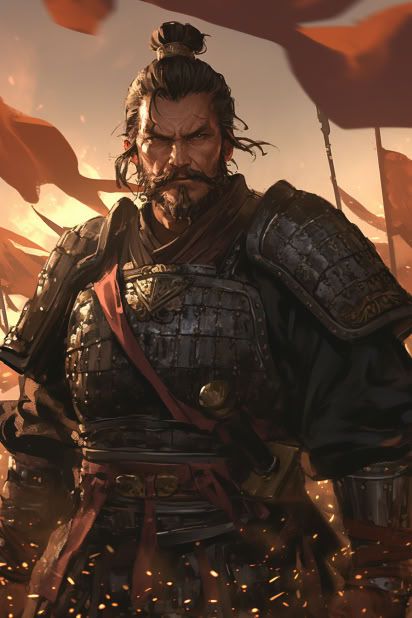
Chapter 1
A Qianhu unique in history, a Qianhu hailed as the God of Wealth, a Qianhu with the best luck, a Qianhu deeply loved by the people of the Ming Dynasty, a Qianhu to whom the emperor owes millions of taels of silver, a Qianhu whom both friends and foes wish a long life!
A cunning merchant returns to the Ming Dynasty and unexpectedly possesses the body of a border garrison Qianhu. At this time, the mighty Wanli Emperor is on the throne, and the dynasty is about to launch three major campaigns: the Ningxia Campaign, the Korean Campaign, and the Bozhou Campaign!
Farming, training soldiers, making money... Making money alone is not as good as making money together. Wherever he goes, gold flows from his sleeves, and merchants and bureaucrats alike form interest groups with him—even the emperor is no exception...
Through the reigns of many emperors, a different history, a different Ming Dynasty!
Main Text
Chapter 1: Possessing the Border Garrison
Wrapped in a quilt, leaning sideways on the heated brick bed, staring at the face in the bronze mirror—even after a few days, William Young still found it hard to accept the fact that he had traveled through time.
The face in the mirror was young, the skin somewhat rough and dark, with a hint of arrogance and a touch of childishness—just like the expression of a delinquent youth used to being cocky. But at this moment, the face looked a bit listless and pale.
No matter how he looked at it, this rough, dark face, not yet twenty years old, with an ancient-style hair bun on top, had nothing in common with his original face—fair, slightly chubby at thirty-five, with a crew cut.
William Young could not explain why such a strange thing had happened to him. In modern times, he was just a distributor. A few days ago, he was driving out of town to meet a client, but an accident occurred on the way—the car plunged into a valley, and he lost consciousness. Even more unexpectedly, when he woke up, he found himself in the seventeenth year of the Wanli era of the Ming Dynasty, as a completely different person.
Although William Young had read some popular science works before, which often included articles about strange spatial phenomena in history—like someone walking down the street, suddenly encountering a mist, and when the mist cleared, they found themselves in another country.
He had read quite a few such bizarre stories, but at the time, William Young just treated them as amusing tales to pass the time.
But now, this had happened to him. Suddenly transported from a familiar world to a completely unfamiliar one, and even more absurdly, from modern times back to ancient times—anyone would feel terrified and uneasy if such a strange thing happened to them, and William Young was no exception.
After several days of fear and anxiety, by today, William Young had finally calmed down a bit. He could now settle his mind and start thinking about things.
William Young was actually quite clear about the identity of his current body. First, he had learned some things from the outside world over the past few days. Second, and most importantly, when he possessed this body, he had merged with its memories.
Perhaps it was because the brain of this body had been severely damaged at the time, so when William Young possessed it, its original consciousness had completely disappeared. Everything about this body—its physical abilities, memories, and so on—was now fully under William Young's control.
Having these memories saved William Young the trouble of spending time getting to know this world—language, environment, customs, and so on. Even just the language alone was a big help.
Although the official language of the Ming Dynasty was not much different from modern Mandarin, there were still some differences. Just look at the tone of speech in ""Jin Ping Mei,"" written during the Wanli period, and you'll see. Not to mention the even greater differences in environment, customs, and etiquette.
Moreover, possessing someone else's body without their memories would make every action seem suspicious to those familiar with the original person, always risking exposure. What would he say then?
William Young couldn't imagine what would happen if others discovered he was not their original relative—would he be burned as a monster? At best, driven out of the house? Even so, rootless and alone, how could he survive in the Ming Dynasty?
After experiencing shock and fear, everyone must eventually face the reality of survival, and William Young was no different. Fortunately, with this person's memories, he could impersonate their identity. This risk was now reduced to a minimum—a blessing in misfortune.
From the original memories of this body, William Young learned that the original name of this body was Samuel Howard, the son of Henry Howard, a hereditary Qianhu of Wuzhai Fort, Zhenxi Garrison, Shanxi Commandery, Ming Dynasty, aged seventeen.
As for the rest of the family: his father, Henry Howard, was fifty-nine this year. His mother, The Young Family, was fifty-seven. In addition, Henry Howard had two concubines, whom Samuel Howard called Second Mother and Third Mother.
To elaborate, Samuel Howard was the eldest son of the Huang family, but he had three older sisters: the eldest, Violet Howard, twenty-seven this year; the second, Grace Howard, twenty-five; and the third, Claire Howard, twenty-two. In addition, Samuel Howard had a younger brother and a younger sister, born to the second and third mothers, respectively. His brother, Brian Howard, was fourteen this year. His sister, Lucy Howard, was nine.
All three sisters were born to The Young Family and had already married, each to the son of an officer from various garrisons.

