Chapter 2
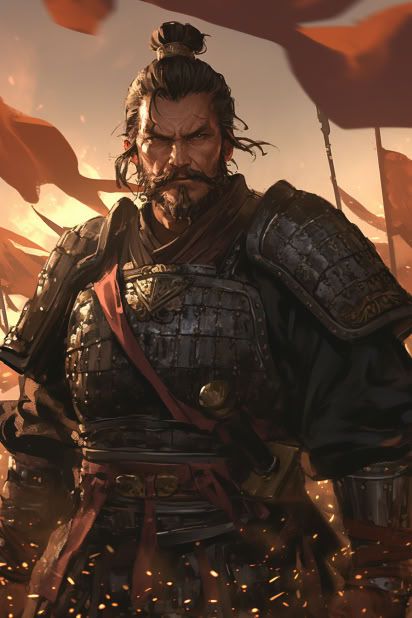
Samuel Howard was no exception. His father, Henry Howard, had arranged a marriage for him early on, to the daughter of a general’s family from a nearby garrison. That’s how it was for children of military families—they were tools for intermarriage, rarely able to make their own choices. In the Ming Dynasty, the concept of free love didn’t exist in people’s minds; it was all about parental orders and matchmakers’ words.
After having three daughters, Henry Howard still had no son and couldn’t help but worry. Fortunately, The Young Family’s womb proved reliable, and she finally gave birth to a son, Samuel Howard.
Henry Howard and The Young Family had Samuel Howard when they were both over forty, so they inevitably doted on him. This led to Samuel Howard developing a domineering temperament—he was fond of fighting and bullying, often getting into conflicts and frequently oppressing the military households of Wuzhai Fort.
The military households of Wuzhai Fort were all very afraid of Samuel Howard, and privately called him “Huang the Tiger.” Even his younger brother, Brian Howard, admired him with a touch of fear, while only his younger sister, Lucy Howard, liked to cling to her big brother.
Unlike his outwardly aggressive behavior, Samuel Howard also enjoyed reading military and leisure books in addition to practicing with weapons. This was rare among the Ming army in the mid-to-late Ming period, where most garrison soldiers were rough and boorish men. Generals like Qi Jiguang, who possessed both courage and wisdom, were few and far between.
Having read many leisure books, Samuel Howard inevitably developed some fanciful ideas. His father, Henry Howard, the hereditary commander of Wuzhai Fort, would turn sixty next year. At that age, he would retire with honor, and Samuel Howard, already designated as the successor, would take over as the next commander of Wuzhai Fort. In Ming terminology, this was called “substitute office,” and the heir was called “shè rén.”
Samuel Howard had long been designated as the successor. Next year, when his father retired and he took over, he feared he would be stuck in Wuzhai Fort, with little freedom to go out. So, at the beginning of this year, Samuel Howard had a sudden idea—he wanted to travel the world like the protagonists in his books: a consequence of reading too many leisure books.
Henry Howard and The Young Family had always doted on their son. When they heard of Samuel Howard’s wish, they were first shocked and tried to dissuade him, but couldn’t overcome his persistence. After their persuasion failed, Henry Howard, being from a military family himself, though not much of a reader, had heard the saying “read ten thousand books, travel ten thousand miles.” He thought it might be good for his son to see the world. At this time, the garrison system was in decline, and military discipline was no longer as strict as in the early Ming. Successors without official posts still had some freedom of movement.
So, Henry Howard gave Samuel Howard some silver, sent two family servants to protect him, and used his connections to get Samuel Howard some travel permits. Thus, from early March to early November this year, Samuel Howard traveled for several months, roaming happily across the great rivers north and south.
But as joy can turn to sorrow, and fortune is unpredictable, nothing happened during his months away, but on his way home, just a dozen li from Wuzhai Fort, Samuel Howard’s horse was startled by falling rocks on a mountain path. He lost control and plunged into a ravine, crashing into rocks several times before finally passing out.
For some unknown reason, William Young, who had driven his car off a cliff in modern times, crossed through time and happened to possess Samuel Howard’s body, creating an unprecedented event.
The two family servants, seeing Samuel Howard in trouble, were naturally terrified. They quickly rescued the now-possessed Samuel Howard, and after returning to Wuzhai Fort, chaos ensued. Especially Samuel Howard’s mother, The Young Family, who, seeing her son’s strange behavior after waking, thought he was badly frightened and wept uncontrollably.
For the past few days, William Young, now in control of Samuel Howard’s body and mind, had been forced to rest in bed. This gave William Young a chance to collect his thoughts and calm his mind.
……
“What’s done is done. There’s no use overthinking it. Since I’m here, I might as well settle in!”
After all, a commander is a mid-level officer, rank five, commanding 1,120 soldiers. It’s much better than possessing the body of a poor military household. If I work hard, there’s much to be accomplished. I was a successful businessman in my previous life; maybe in this one, I can become a successful military man.
William Young let out a breath, set the bronze mirror on the table by the kang, threw off the thick quilt, rolled off the kang, grabbed a cotton robe, and got dressed—he had already gotten used to wearing ancient clothing these past few days. He was always someone who could adapt easily; in modern times, he prided himself on being able to adjust to any environment. The confusion of the past few days was only natural.
William Young looked around. In these days, he hadn’t really taken a good look at the room he was in.
From his recent experiences and Samuel Howard’s memories, William Young knew he was in Samuel Howard’s home—the commander’s residence in Wuzhai Fort. This was the room Samuel Howard usually lived in.
Wherever he looked, it was ancient, old, and typical of a Shanxi siheyuan (courtyard house), just like those seen on TV.
There were several rosewood tables and chairs in the room, with a tea set on the table. Overhead were black tiles, wooden beams, and carved window frames. The windows were hung and latched, covered with some kind of paper, making the room bright.
By the kang was a large chest, and on the wall above the kang was a painted “border” about two feet high, decorated with pictures of lions playing with embroidered balls and endless wealth motifs. The colors were bright and vivid, strikingly eye-catching.

